From 25% to 90%: How AI Agents Transformed Programming in Just One Year
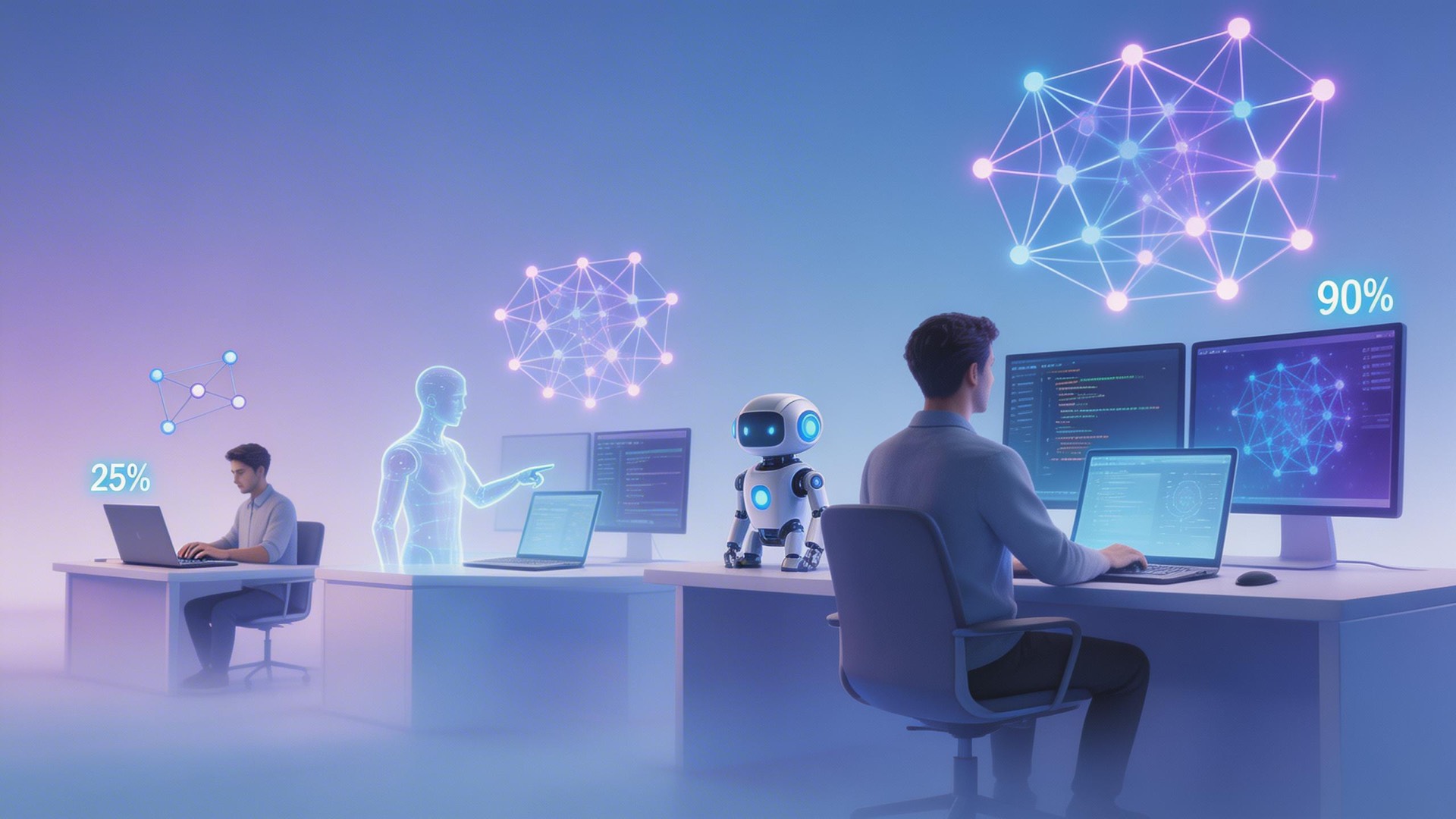
One year ago, AI coding assistants could write maybe a quarter of a developer’s code. Today? The latest models can generate nine-tenths of it. This isn’t hype—it’s the lived experience of developers working at the frontier of AI-assisted programming.
The Core Insight
David Crawshaw’s latest update on programming with AI agents reveals something remarkable: the fundamental nature of programming work has flipped completely. At big companies, his time used to split 80-20 between reading and writing code. At startups, it was closer to 50-50. Now? It’s 95-5—almost entirely reading and reviewing.
This shift didn’t come from better IDEs or smarter autocomplete. It came from something nobody saw coming: the death of the IDE itself.
“In 2021, the IDE had won,” Crawshaw writes. “In 2026, I don’t use an IDE any more.”
The whiplash is real. Copilot seemed like the inevitable future just four years ago. Now developers are back to Vi—a text editor turning 50 this year—because agents have made everything else obsolete.
Why This Matters
The cheap model trap is real. Using anything other than frontier models isn’t just suboptimal—it’s actively harmful. When you experiment with budget alternatives like Sonnet or local models, you learn the wrong lessons about what’s possible. You’re training your intuition on yesterday’s limitations.
Built-in sandboxes are broken. The constant “may I run cat foo.txt?” prompts and mysterious sandbox failures aren’t just annoying—they fundamentally break the agent workflow. The solution? Fresh VMs. Real isolation. Accept that you need to provide your own sandbox.
Software shape is wrong. Here’s a striking example: Crawshaw needed SQL queries on his Stripe data. Instead of waiting for Stripe’s fancy new Sigma product API, he typed three sentences and had an agent build custom ETL—query everything via standard APIs, dump to SQLite, done. Problem solved better than the official product could.
Three sentences replaced an entire product team’s roadmap.
Key Takeaways
- Model improvements dwarf harness improvements. Agent frameworks haven’t changed much; raw model capability has exploded
- All public benchmarks are gamed to death. Ignore them. Trust qualitative experience
- The best software for agents is the best software for programmers. Build what developers love and users (via their agents) will follow
- Local models will win eventually. But that day isn’t today. Pay for frontier models until diminishing returns hit
Looking Ahead
We’re in a strange moment. Anti-LLM arguments that seemed reasonable a year ago now sound like advocating against power tools in carpentry. Yes, there are real concerns about labor market disruption. Yes, agents fail catastrophically multiple times a week.
But the direction is clear: every customer will soon have an agent writing code against your product. The software that survives will be software that programmers—and their agents—love to use.
The next year will bring more changes. The philosophy that might survive: build for programmers, and everyone else follows.
Based on analysis of “Eight more months of agents” by David Crawshaw