The Agent Code Crisis: Why GitHub’s Former CEO Just Raised $60M to Solve It
When the person who oversaw GitHub Copilot’s rise decides the AI coding revolution needs saving from itself, you should probably pay attention.
The Core Insight
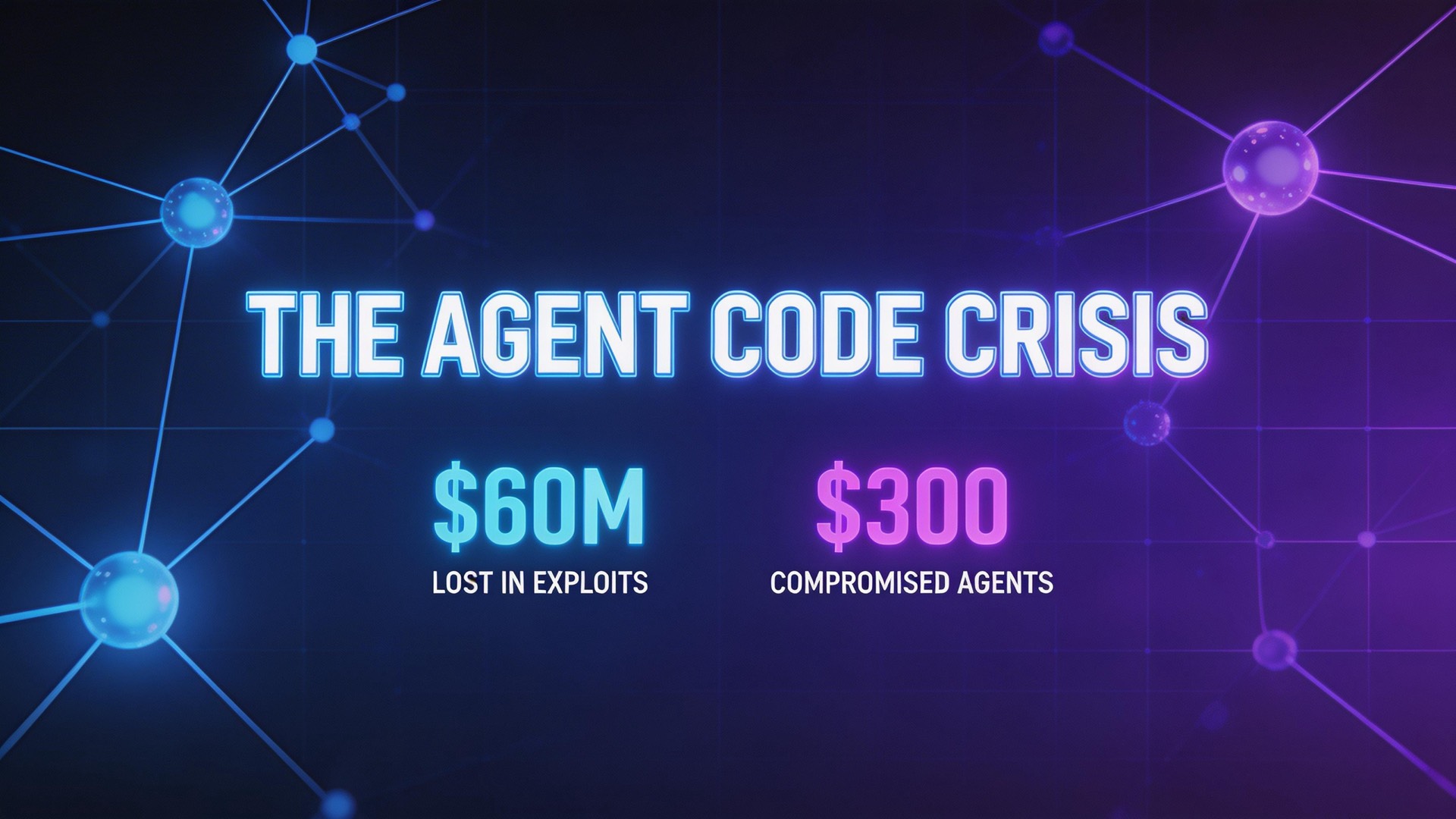
Thomas Dohmke, former CEO of GitHub, has raised the largest seed round ever for a developer tools startup: $60 million at a $300 million valuation. His new company, Entire, tackles a problem that should terrify anyone paying attention to how AI is changing software development.
The problem: AI agents are generating code faster than any human can understand it. And nobody can tell if it’s any good.
Dohmke puts it starkly: “We are living through an agent boom, and now massive volumes of code are being generated faster than any human could reasonably understand. The truth is, our manual system of software production—from issues, to git repositories, to pull requests, to deployment—was never designed for the era of AI in the first place.”
Why This Matters
The current software development workflow emerged in an era of human-speed code production. Git, pull requests, code reviews—these processes assume that code gets written at a pace where humans can meaningfully review it. That assumption is breaking down fast.
Popular open source projects are already drowning in AI-generated contributions, much of it “AI slop”—poorly designed, possibly unusable code that technically compiles but creates maintenance nightmares. And that’s just the public-facing problem. Inside companies, the situation may be worse: AI agents cranking out features without anyone understanding why the code works (or doesn’t).
Entire’s approach has three components:
1. Git-compatible database to unify AI-produced code
2. Universal semantic reasoning layer allowing multiple AI agents to collaborate
3. AI-native UI designed for agent-to-human collaboration
The first product, Checkpoints, automatically pairs every piece of AI-generated code with its context—the prompts, transcripts, and reasoning that created it. This enables developers to review not just what the AI produced, but why it produced it.
The Deeper Technical Challenge
Here’s what makes this interesting from an engineering perspective: traditional version control tracks changes to files. But with AI agents, the interesting artifact isn’t the diff—it’s the conversation that produced the diff.
Consider a scenario where an AI agent writes a function. The code might look reasonable, but:
– Did the agent understand the requirements correctly?
– Did it consider edge cases?
– Did it make unstated assumptions about the codebase?
– Did it copy a problematic pattern from its training data?
Without context, these questions are unanswerable. And as codebases increasingly contain AI-generated components, debugging becomes archaeology—trying to reconstruct why past decisions were made.
Checkpoints addresses this by making the AI’s “thought process” a first-class artifact, searchable and reviewable alongside the code itself.
Key Takeaways
AI code generation has outpaced human understanding. The tools that helped us manage human-scale software development are inadequate for AI-scale production.
Context is the missing piece. Knowing what code does isn’t enough; you need to know why it was written that way. Traditional git history doesn’t capture AI reasoning.
The open source community is a canary. If maintainers can’t keep up with AI contributions, enterprise codebases are next.
This is a $300M seed bet that the problem is critical. Felicis, Madrona, Datadog’s CEO, and Jerry Yang all see agent code management as foundational infrastructure.
Looking Ahead
Dohmke spent four years watching GitHub Copilot transform how developers write code. Now he’s betting that transformation requires equally radical changes to how we manage code.
The question isn’t whether AI will dominate code production—that’s already happening. The question is whether we’ll have tools to maintain human understanding of software systems, or whether we’ll eventually find ourselves operating codebases we can’t comprehend.
Entire is betting on the former. Given who’s making the bet, that’s worth taking seriously.
Based on: “Former GitHub CEO raises record $60M dev tool seed round at $300M valuation” (TechCrunch)