Apple’s 2026 Hardware Refresh: What the iPhone 17e Tells Us About Budget Strategy
Apple is reportedly accelerating its low-end iPhone updates while keeping prices flat—a notable shift in a market defined by AI-driven component inflation.
The Core Insight
According to Bloomberg’s Mark Gurman, Apple is preparing a wave of hardware updates including the iPhone 17e, new iPads (base and Air models), and MacBook Pro refreshes. The most interesting signal comes from the budget iPhone segment.
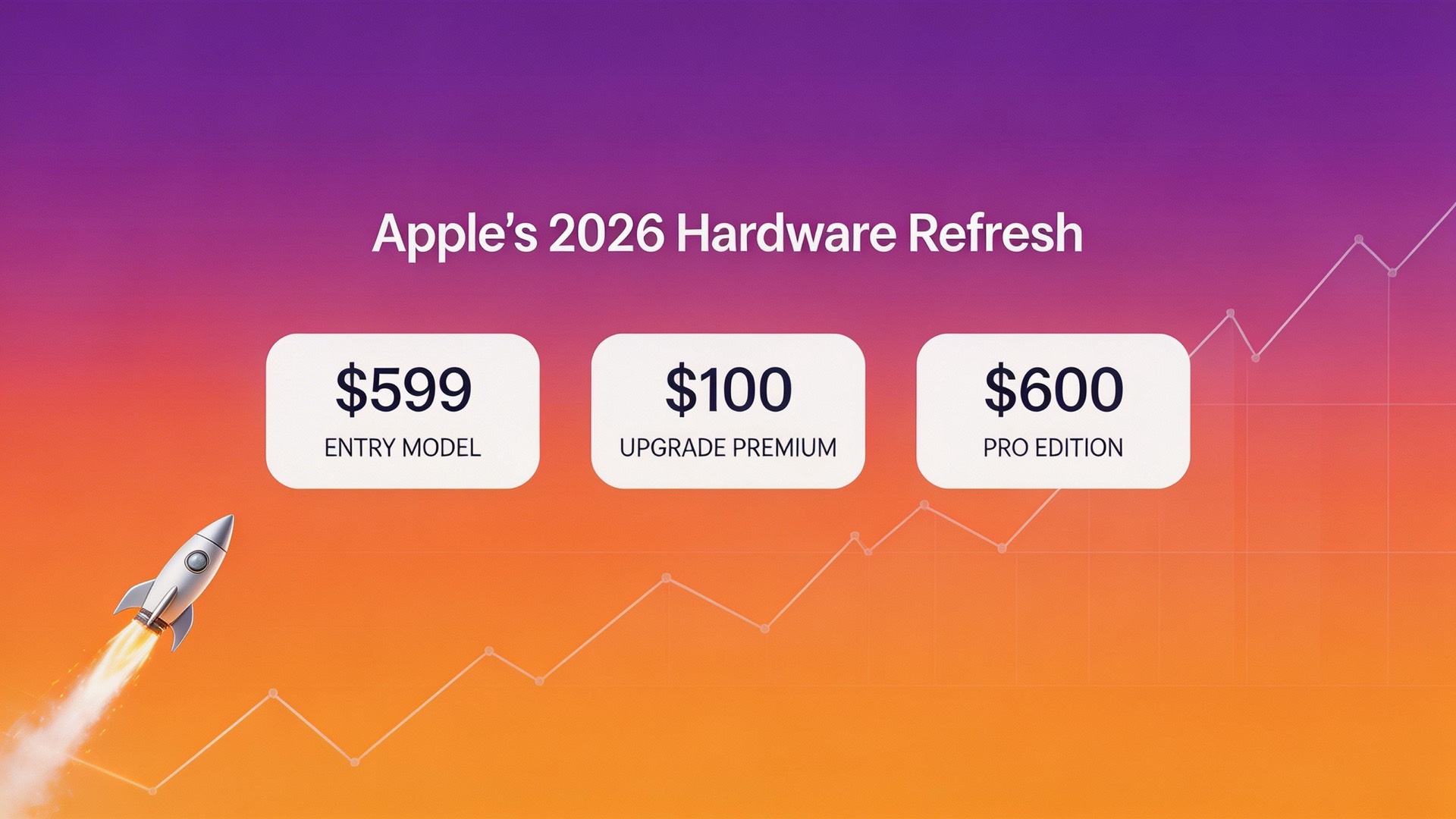
The iPhone 17e would include an A19 chip (matching the regular iPhone 17), add MagSafe charging, and launch at the same $599 price as the current 16e. That last point matters enormously. In an era when AI-driven RAM shortages and storage costs are pushing device prices upward, maintaining price parity while upgrading components represents a strategic choice rather than market necessity.
This also marks a significant departure from Apple’s historical approach to budget iPhones. The iPhone SE received sporadic updates with multi-year gaps between generations. The iPhone 16e was introduced just last year. Annual updates to the budget tier suggest Apple is treating this segment as a strategic priority rather than an afterthought.
Why This Matters
The budget iPhone strategy reveals several competing pressures:
The Product Line Complexity Problem: The iPhone 17e would exist alongside the iPhone 16 and 16 Plus, which start at just $100 more and include dual-lens cameras and the Dynamic Island. Having four different iPhone models in the $600-$800 range creates genuine consumer confusion. Is the 17e really the “budget” option when an arguably superior iPhone 16 Plus is barely more expensive?
The Component Reality: Maintaining $599 pricing while adding MagSafe and the A19 chip suggests Apple is either accepting margin compression or finding efficiency gains elsewhere. Given Apple’s typical margin discipline, the latter seems more likely—and the mechanism matters for understanding their supply chain strategy.
The AI RAM Pressure: Current AI features require substantial RAM, creating shortages that affect device pricing industry-wide. Apple’s ability to hold pricing suggests either superior supplier relationships or architectural decisions that reduce AI feature RAM requirements.
Key Takeaways
- iPhone 17e: A19 chip, MagSafe, $599 (price maintained from 16e)
- New base iPad and iPad Air updates “soon”
- MacBook Pro updates “shortly”
- iPad mini, Studio Display, and other Macs planned for later in 2026
- Budget iPhone now on annual update cycle (vs. multi-year gaps for old SE)
- Single-lens camera and notched screen (no Dynamic Island) expected to continue
Looking Ahead
The most interesting question isn’t whether Apple can maintain $599 pricing—clearly they can. It’s whether the product line differentiation makes sense.
A customer choosing between the iPhone 17e at $599 and the iPhone 16 Plus at $699 faces a genuine trade-off: newer processor and MagSafe versus dual cameras and Dynamic Island. That’s not a simple “pay more for premium” decision; it’s a feature preference evaluation that adds friction to the buying process.
Apple has historically excelled at creating clear product tier differentiation. The current budget iPhone strategy muddles that clarity. Whether that’s a temporary transition artifact or a permanent complexity remains to be seen.
Based on analysis of “Report: Imminent Apple hardware updates include MacBook Pro, iPads, and iPhone 17e” from Ars Technica