The Amsterdam Compiler Kit: A Modern Lesson in Durable Toolchains
Software infrastructure has a strange lifecycle. Some systems burn bright and disappear. Others quietly persist for decades, outliving platforms, languages, and fashion.
The Amsterdam Compiler Kit (ACK) is in the latter category: a complete compiler toolchain with roots going back to the late 1980s, still shipping a coherent story about how to go from source code to executables across an eclectic set of targets. Reading its current README is a reminder that “toolchain design” is not a solved problem; it is an evolving set of trade-offs around portability, reproducibility, and the hidden cost of assumptions.
The Core Insight
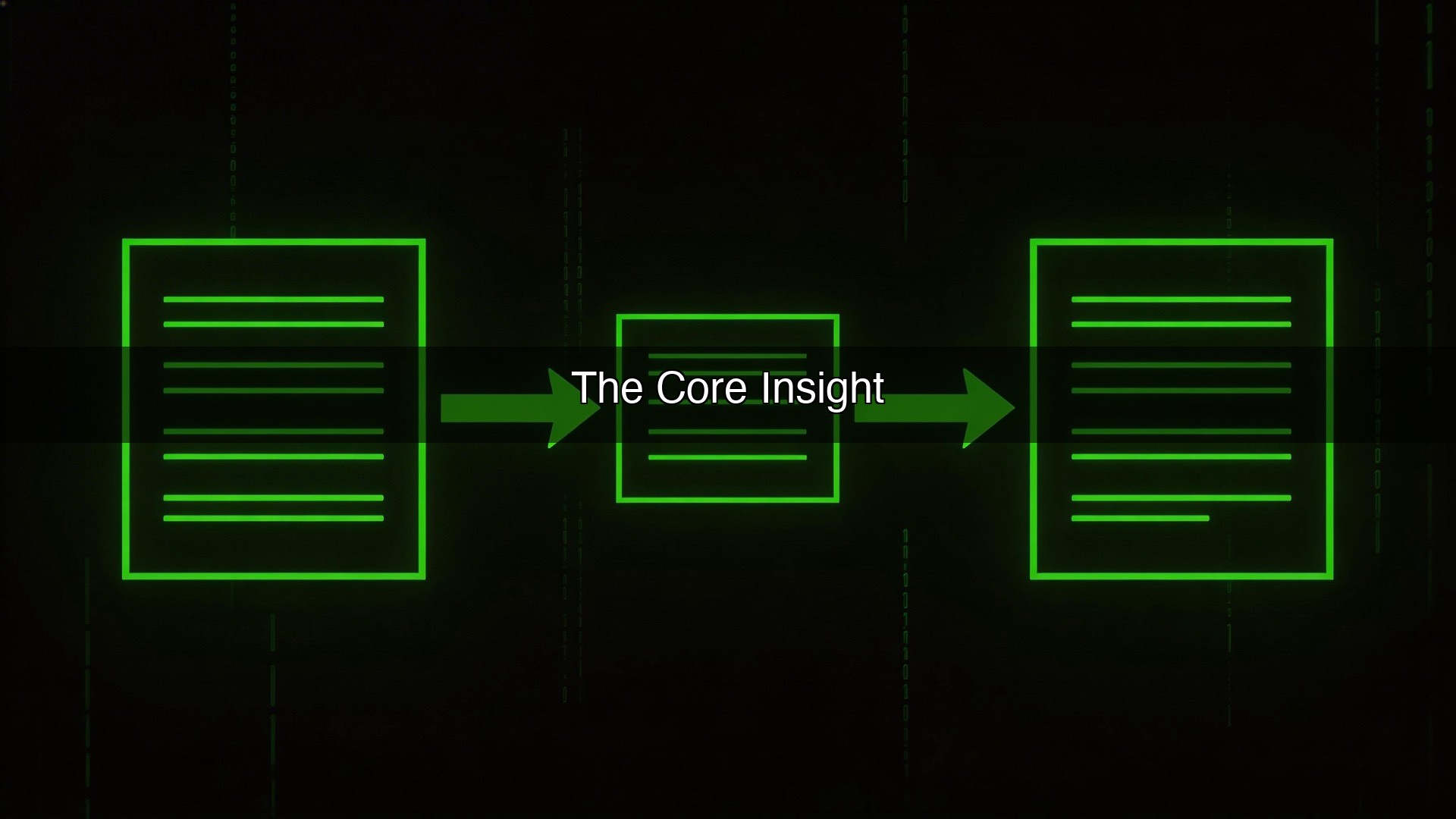
A durable compiler toolchain is less about peak performance and more about clear interfaces, stable intermediate representations, and explicit platform boundaries.
ACK positions itself as a full toolchain: front-end compilers for multiple languages, code generators, support libraries, and the glue required to produce runnable binaries for many platforms. That breadth is not just nostalgia. It highlights a design philosophy that modern developers can learn from:
- Choose a small number of core representations (and keep them stable).
- Separate language front ends from machine back ends.
- Treat platforms as explicit “products” with their own build rules and documentation.
In 2026, we talk a lot about “portable runtimes” and “write once, run anywhere.” ACK is a very literal incarnation of that ambition, implemented with old-school toolchain mechanics rather than VMs.
Why This Matters
1) Portability is a systems property, not a language feature
Many developers assume portability comes from the language (for example, “C is portable,” “Java is portable,” “WebAssembly is portable”). In practice, portability comes from the ecosystem around code generation: assemblers, linkers, libraries, calling conventions, and the set of assumptions baked into build tooling.
ACK makes those assumptions visible. The README lists targets from Linux variants to MS-DOS outputs and more exotic environments. The exact list is less important than what it implies: a serious portable system must define what a “platform” means and how it is produced.
2) Toolchains are dependency graphs with sharp edges
ACK’s build requirements are a concise inventory of what “real toolchains” depend on:
- A C compiler
- Parser generators (flex/yacc)
- GNU make
- Lua with POSIX bindings
- Python 3
- Significant disk space
That mix is a reminder that compilers are not single binaries; they are build systems, generators, and scripts. If you care about reproducibility, you need to manage that graph.
A risk point: as the dependency stack grows, so do the “time bombs” (version skew, missing packages, subtle platform differences). ACK’s README even calls out operational gotchas like file descriptor limits.
3) “Own object formats” are a double-edged sword
ACK uses its own object format and warns that you cannot mix objects from ACK with those produced by another compiler.
That design can be defensible:
- It allows internal consistency across back ends.
- It avoids being trapped by an external format’s constraints.
But it also creates integration friction:
- You cannot easily adopt a single optimized library from the native toolchain.
- Debugging and profiling tooling may not interoperate.
- The cost of bridging formats gets paid later.
Modern analogs exist: custom IRs, custom bytecode, custom packaging formats. The lesson is not “never do it,” but “be explicit about the integration story from day one.”
4) ACK is a case study in “small standard libraries”
The README notes that C library support is roughly ANSI C level. That is a limitation, but it also clarifies the boundary between compiler and runtime.
In a world where many languages ship with huge batteries-included standard libraries, it is easy to forget how much of software portability is actually runtime portability. Toolchains can only carry you so far if the runtime and OS surfaces are inconsistent.
5) A practical lesson for modern teams: keep the platform layer readable
The most useful way to apply this to modern engineering is not “use ACK.” It is: model your own build and platform support the way a toolchain does.
If you ship software across multiple environments (macOS, Linux distros, containers, edge devices, CI runners), consider:
- Do you have a “platform matrix” that is documented and tested?
- Are platform differences represented as code (build rules) rather than tribal knowledge?
- Can a new engineer reproduce a release build from scratch?
ACK’s platform-centric framing is a good mental model for answering those questions.
Key Takeaways
- Durable toolchains succeed by stabilizing interfaces: IR, platform contracts, and build rules.
- Portability requires explicit platform definitions, not just a portable language.
- Toolchains are dependency graphs; reproducibility needs disciplined dependency management.
- Custom object/IR formats enable control but complicate integration. Plan the bridge early.
- Treat platform support as a first-class product surface with docs and tests.
Looking Ahead
The most interesting future-facing angle is how systems like ACK intersect with today’s “portable compute” trends.
On one hand, containerization and WASM reduce the need for native cross-compilation in many product teams. On the other hand, edge computing, retro-computing, embedded devices, and long-term archival workloads make durable toolchains relevant again.
If you build developer tooling, here is an executable suggestion: pick one boundary (an intermediate representation, a package format, or a platform spec) and make it boring. Version it. Document it. Build integration tests around it. The glamour is in demos; the longevity is in interfaces.
The counterargument is that a conservative interface can hold back innovation. True. The compromise is to design for extensibility: keep a stable core and allow optional features with clear negotiation and compatibility rules.
ACK’s continued existence is proof that, in systems engineering, stability is a feature users can build careers on.
Sources
- The Amsterdam Compiler Kit (README in GitHub repository) https://github.com/davidgiven/ack
Based on analysis of The Amsterdam Compiler Kit (README in GitHub repository) https://github.com/davidgiven/ack